Careers
How to Become a Roofer: A Beginner's Route into Flat Roofing
The realistic routes into roofing in the UK, how long each takes, and the point where a short flat roofing course starts paying for itself.
If you're working out how to become a roofer in the UK, the usual answer is to start with an apprenticeship, a college course or a labouring job with a roofing firm, then build experience and work towards an NVQ. You don't need a licence. Once you're working on roofs, short manufacturer courses let you add specific systems, such as liquid flat roofing, that you can price and guarantee yourself.
We train roofers every week at RESTEC Academy, and plenty of them started out exactly this way. Here's the route as it usually works.
What are the routes into roofing?
| Route | Typical length | Good for |
|---|---|---|
| Roofing apprenticeship | Usually two years or more | School leavers and career changers who want to earn while they learn |
| College course | Often one or two years, part-time or full-time | Getting the basics before looking for site work |
| Labouring for a roofing firm | Open-ended | Getting on site quickly and learning from experienced roofers |
| NVQ (experienced worker route) | Depends on experience; assessed on real work | People already roofing who need formal proof of competence |
Apprenticeship arrangements, funding and pay rules change, so check current details with the CITB, the NFRC or the government's apprenticeship service before you commit.
What's the best first step for a beginner?
Get on a roof with people who know what they're doing. Whatever route you pick, the things that matter most early on are working safely at height, reading a roof (falls, outlets, what's under the covering) and seeing how good roofers prepare a surface. Courses teach techniques; site time teaches judgement.
If you're aiming for bigger sites, plan for a CSCS card. Main contractors usually want one, and the skilled-worker cards are normally tied to an NVQ or equivalent. Our guide to roofing qualifications in the UK explains how these fit together.
When should you add a flat roofing course?
A one-day manufacturer course makes most sense once you've done some roofing and want a system you can offer on your own jobs. Flat roofs on extensions, garages, dormers and balconies come up constantly, and many general roofers and builders turn that work away because they don't have a system they trust.
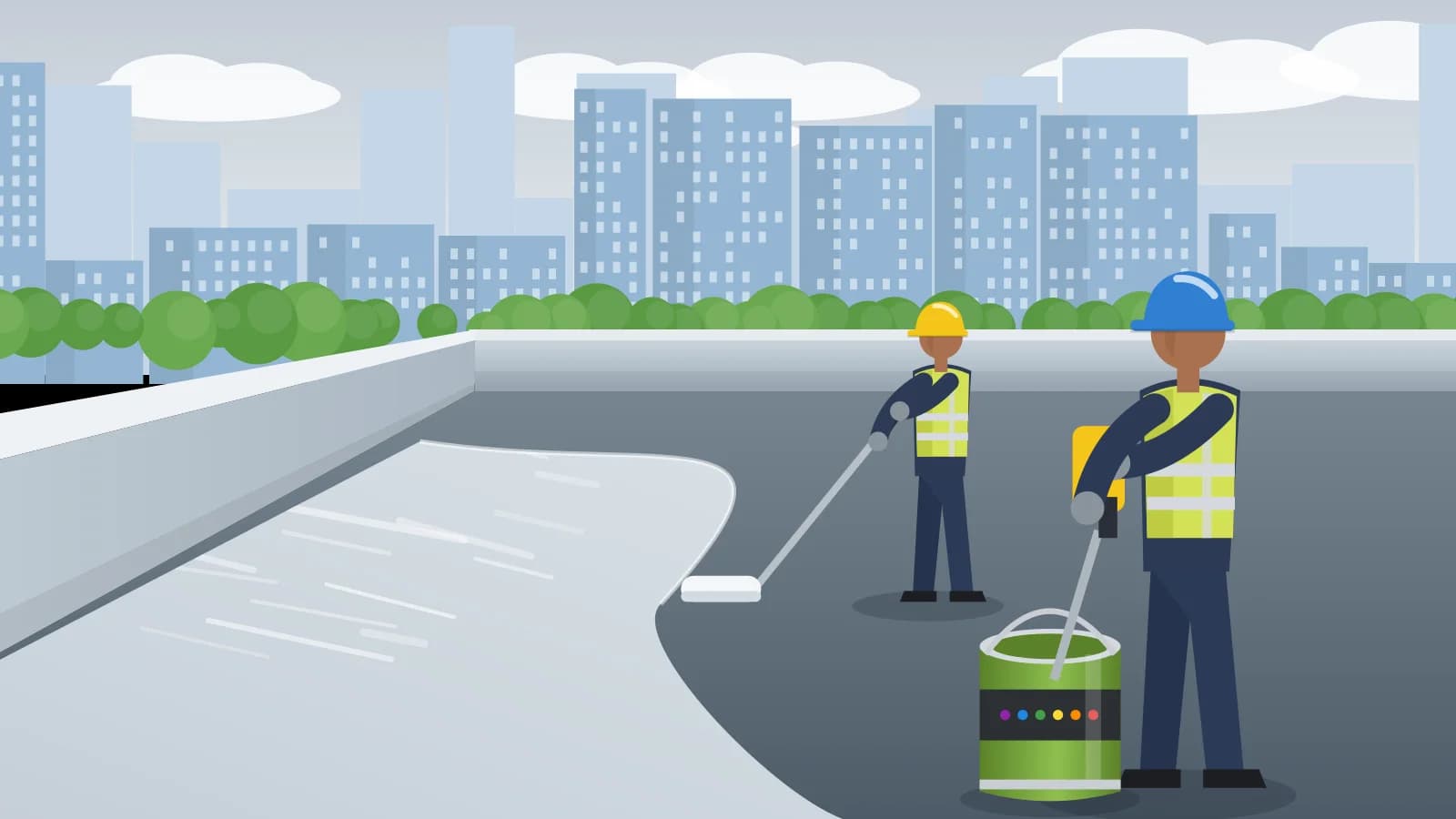
Our Flexitec flat roofing course is a full day on training rigs covering:
- preparing new build and overlay roofs, including primers
- mixing catalyst correctly for the product and temperature
- RESTRIM edge trims and detailing around outlets and upstands
- base and topcoats, and registering the roof for the guarantee
It costs from £120 + VAT per delegate, and groups are capped at 12. When you finish you get an attendance certificate and a personal Trainer ID, which lets you offer RESTEC's 20-year materials guarantee on qualifying roofs you install and register. For someone starting out on their own, being able to put a manufacturer guarantee on a quote makes a real difference.
Can you go on a course with no experience?
You don't need any qualifications to book one of our training days. But you'll get far more from it if you've already spent time on roofs, because the day assumes you know your way around a site. If you're brand new to the trade, call the training team on 01352 748 600 and they'll be straight with you about whether it's the right time.
Where to train
We run training at 22 centres across the UK, Northern Ireland and the Channel Islands. Search by postcode on the locations page, or browse the upcoming training days and book online.
Frequently asked questions
Do you need qualifications to be a roofer in the UK?+
Not legally. In practice, larger sites and main contractors usually want a CSCS card, which is normally linked to an NVQ or equivalent. Homeowners are more likely to ask about guarantees.
How long does it take to become a roofer?+
An apprenticeship usually takes two years or more. If you start as a labourer you can be working on roofs straight away and build towards an NVQ as you gain experience.
Does RESTEC Academy run apprenticeships?+
No. We run one-day manufacturer courses on RESTEC's liquid roofing systems. They work best once you have some site experience.
What's a good first specialist skill to add?+
Flat roofing is a common choice because extensions, garages and dormers need it constantly. A one-day Flexitec course gives you a liquid flat roofing system you can install and guarantee.